







Why Extreme Weather Demands More Than a One-Time HVAC Checkup
The benefits of a maintenance plan in extreme climates go far beyond simple peace of mind — they can mean the difference between a cool, safe home and a costly breakdown on the hottest day of the year. In California’s Central Valley, where summer temperatures regularly push past 110°F and thick agricultural dust coats everything in sight, your HVAC system works harder than almost anywhere else in the country. Systems in regions like this can run 8 to 10 months out of the year, compared to just 3 months in milder areas — and that kind of relentless demand accelerates wear, drives up energy bills, and dramatically shortens equipment life.
Here’s a quick look at the core benefits a maintenance plan delivers in extreme climates:
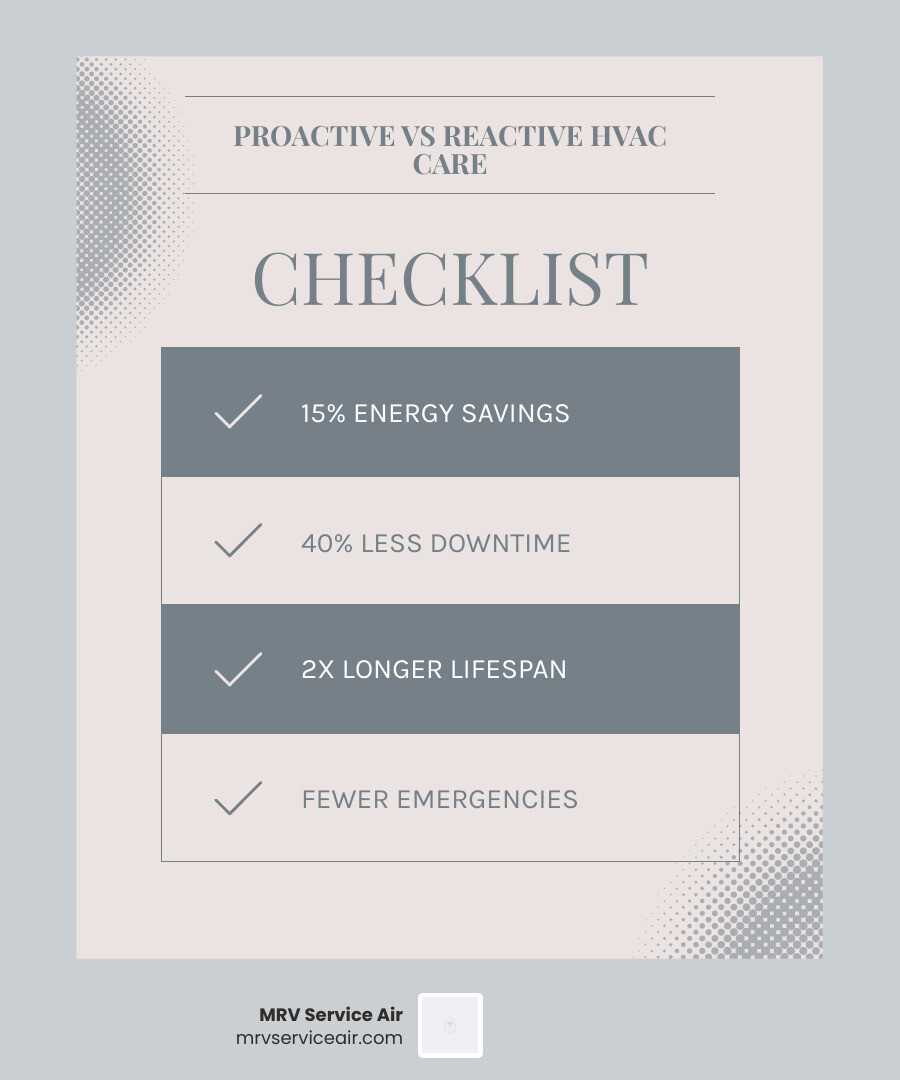
- Lower energy bills – Regular tune-ups keep your system running efficiently, reducing energy use by up to 15%
- Fewer emergency repairs – Preventive care catches small problems before they become expensive failures
- Longer equipment lifespan – Well-maintained systems last significantly longer than neglected ones
- Priority service – Plan members get faster response when demand peaks during heatwaves
- Better indoor air quality – Clean filters and coils reduce dust, allergens, and pollutants circulating through your home
- Warranty protection – Most manufacturers require documented professional maintenance to keep warranties valid
- Reduced downtime – Proactive maintenance can cut system downtime by up to 40% during harsh weather
For homeowners and small business owners in Kern County and the surrounding Central Valley, this isn’t a luxury — it’s a practical, financially smart way to protect one of the biggest investments in your home or building.
Understanding the Benefits of a Maintenance Plan in Extreme Climates
When we talk about the benefits of a maintenance plan in extreme climates, we have to look at the unique environmental stressors found right here in Delano and Bakersfield. Unlike a standard service call—which is often a one-off reaction to a problem—a maintenance plan is a structured, year-round strategy.
In our region, the sheer volume of particulate matter in the air is a major factor. Dust from local orchards and construction sites acts like a thermal blanket on your outdoor condenser coils. This “insulation” traps heat, forcing your compressor to work twice as hard to cool your home. Without a consistent plan, this mechanical stress leads to a rapid decline in energy efficiency and a spike in utility bills. By implementing a Heavy-Duty HVAC Strategy, you ensure that your system is physically prepared to handle the load.
Furthermore, the Valley Dust vs Your HVAC is a constant battle. A maintenance plan provides the deep cleaning necessary to prevent silt and grime from infiltrating sensitive electrical components and motors, which are the primary victims of our harsh climate.
Financial Benefits of a Maintenance Plan in Extreme Climates
From a financial perspective, a maintenance plan offers a significant Return on Investment (ROI). Research shows that properly maintained HVAC systems can reduce energy usage by up to 15%. In a desert-like climate where air conditioners run almost constantly during the summer, that 15% translates to substantial monthly savings on your utility bills.
By choosing Affordable and Reliable AC Maintenance in Kern, you avoid the “Arizona Tax”—the hidden cost of living in extreme heat where systems do five years’ worth of mechanical work in just two years. Catching a $200 minor repair during a scheduled visit prevents it from turning into a $5,000 emergency replacement. Homeowners looking for Affordable AC Maintenance in Richgrove often find that the plan pays for itself through these avoided costs and energy savings alone.
Operational Benefits of a Maintenance Plan in Extreme Climates
Operationally, the goal is system reliability. There is nothing worse than your AC failing on a 110-degree Monday in August. A maintenance plan reduces the risk of these sudden outages by ensuring peak performance when you need it most. For those Finding AC Maintenance in Earlimart, the primary operational benefit is downtime reduction. Professional plans can cut system downtime by as much as 40%, keeping your family safe and your home habitable during even the most intense heatwaves.
How Harsh Weather Strains Your HVAC System
In the Central Valley, our HVAC systems face a triple threat: scorching summers, surprisingly chilly winters, and the “Haboob Factor”—massive dust storms that can choke a system in a single afternoon. When it’s 110 degrees outside, your AC is essentially a life-support system. At these temperatures, the Science of Sweat explains that your unit is under immense pressure to move heat out of your home.
The combination of Dust and Heat creates a “thermal cycle” that is incredibly punishing. As the temperature swings from the cool of the morning to the blistering heat of the afternoon, the metal and plastic components in your system expand and contract. Over time, this causes connections to loosen, seals to crack, and electrical wires to become brittle—a phenomenon known as electrical embrittlement.
Mechanical Fatigue and Thermal Cycling
Mechanical fatigue is the silent killer of HVAC units in extreme climates. High refrigerant pressure during heatwaves puts a strain on the compressor, while the fan motor must fight against the resistance of dust-clogged filters and coils. Think of it like running a marathon while breathing through a straw—eventually, the heart (the compressor) is going to give out.
Learning How to Maintain Your AC in Extreme Heat is critical because it addresses these specific points of failure. Regular lubrication of moving parts reduces friction, and tightening electrical connections prevents the resistance that leads to motor burnout.
Key Components of a Weather-Ready Maintenance Strategy
A truly effective strategy involves more than just a quick look-over. It requires a blend of preventive and predictive maintenance. Preventive maintenance is the scheduled cleaning and adjustment of parts, while predictive maintenance uses diagnostic tools to identify components that are likely to fail soon, even if they are currently working.
Timing is everything. In the Central Valley, you want to schedule your cooling tune-up in the early spring and your heating tune-up in the early fall. This ensures your system is Ready for the Dust to Fly and the temperatures to shift. For those new to the area, a guide like Porterville AC Maintenance 101 can help you understand the specific needs of local systems.
Essential Tasks for Extreme Weather Preparation
To give you an idea of what goes into a professional visit, here is a comparison of common tasks:
| Task Category | Preventive Maintenance (Routine) | Predictive Maintenance (Advanced) |
|---|---|---|
| Airflow | Replacing filters every 30-60 days | Measuring static pressure to find duct leaks |
| Cleaning | Washing outdoor condenser coils | Chemically treating evaporator coils |
| Electrical | Tightening wire connections | Measuring amp draw on motors for wear |
| Mechanical | Lubricating bearings and fans | Checking belt tension and alignment |
| Calibration | Testing thermostat accuracy | Recalibrating sensors for extreme heat |
Maximizing Comfort and Safety During Peak Demand
Extreme weather isn’t just about discomfort; it’s a health and safety issue. During a heatwave, indoor air quality (IAQ) can suffer as dust and allergens are recirculated more frequently. A well-maintained system uses high-quality filters to keep the air clean, which is vital for family members with respiratory issues like asthma.
When demand for HVAC service spikes—usually during the first 100-degree week of the year—repair companies are often booked out for days or even weeks. This is where the benefits of a maintenance plan in extreme climates really shine. Plan members typically receive priority scheduling, meaning they go to the front of the line when an emergency strike.
Priority Scheduling and Member Discounts
Being a plan member means you aren’t just a number in a database; you are a priority. During peak seasons, we prioritize our plan members to ensure they aren’t left in the heat. Most plans also include:
- Diagnostic Fee Discounts: Reduced or waived fees when we come out to find a problem.
- Repair Discounts: Significant savings on parts and labor if a repair is needed.
- Detailed Service History: A digital “Equipment DNA” log that helps us track your system’s health over time.
For more details on how these perks work in our local area, you can find More info about maintenance services here.
Protecting Your Investment and Warranty
An HVAC system is one of the most expensive investments in your home. In a demanding environment like Tulare or Shafter, you want that investment to last as long as possible. While a neglected unit might only last 10 to 12 years in our heat, a well-maintained system can often exceed 20 years.
There is also the matter of your manufacturer’s warranty. Most major brands (like Trane, Carrier, or Lennox) explicitly state in their fine print that the warranty is only valid if the system receives annual professional maintenance. If your compressor fails in year five and you can’t provide proof of maintenance, the manufacturer may deny your claim, leaving you with a bill for thousands of dollars.
Compliance and Risk Mitigation
Beyond the HVAC unit itself, a maintenance plan protects your entire home. For example, a clogged condensate drain line (caused by dust and algae) can overflow, leading to water damage in your attic or walls. In the winter, a cracked heat exchanger in a furnace can leak deadly carbon monoxide into your home. Regular safety audits included in a maintenance plan catch these risks before they become tragedies.
You can find More info about heating services to see how we specifically handle furnace safety in our Kern and Tulare county locations.
Frequently Asked Questions about Maintenance Plans
What is the difference between a maintenance plan and a one-time tune-up?
A one-time tune-up is a single visit to clean and check your system. A maintenance plan is an ongoing agreement that usually includes two visits per year (one for heat, one for AC), along with perks like priority service, repair discounts, and long-term health tracking. It’s the difference between going to the ER when you’re sick and having a primary care doctor who keeps you healthy.
How does extreme heat specifically affect my HVAC system’s lifespan?
Extreme heat increases the internal pressure of the refrigerant and causes the motor to run at higher temperatures. This accelerates the “aging process” of the oil and mechanical parts. In the Central Valley, heat combined with dust creates a “grinding paste” that wears down bearings and seals much faster than in cooler, cleaner climates.
Why is timing critical for seasonal HVAC maintenance in the Central Valley?
If you wait until it’s 100 degrees to call for a tune-up, you’re already behind. By then, the dust from the spring winds has already settled in your unit, and your system is already straining. Scheduling in the “shoulder seasons” (Spring and Fall) ensures your system is optimized before the extreme weather hits, and it ensures you can get an appointment at a time that works for you.
Conclusion
At MRV Service Air, we’ve seen how the Central Valley climate can wreck a perfectly good HVAC system. Whether you are in Delano, Wasco, or Bakersfield, the benefits of a maintenance plan in extreme climates are undeniable. From saving 15% on your energy bills to ensuring your family stays safe during a record-breaking heatwave, a proactive plan is the smartest investment you can make for your home.
Don’t wait for the next dust storm or 110-degree day to find out if your AC can handle the pressure. Schedule your weather-ready maintenance plan today and enjoy the comfort and reliability you deserve.