







Why Keeping Your Home Clean During Dusty Months Is Harder Than You Think
Learning how to keep your home clean during dusty months is a real challenge — especially in places like Kern County where dry winds, agricultural activity, and seasonal dust storms can turn a clean home into a dusty mess within hours.
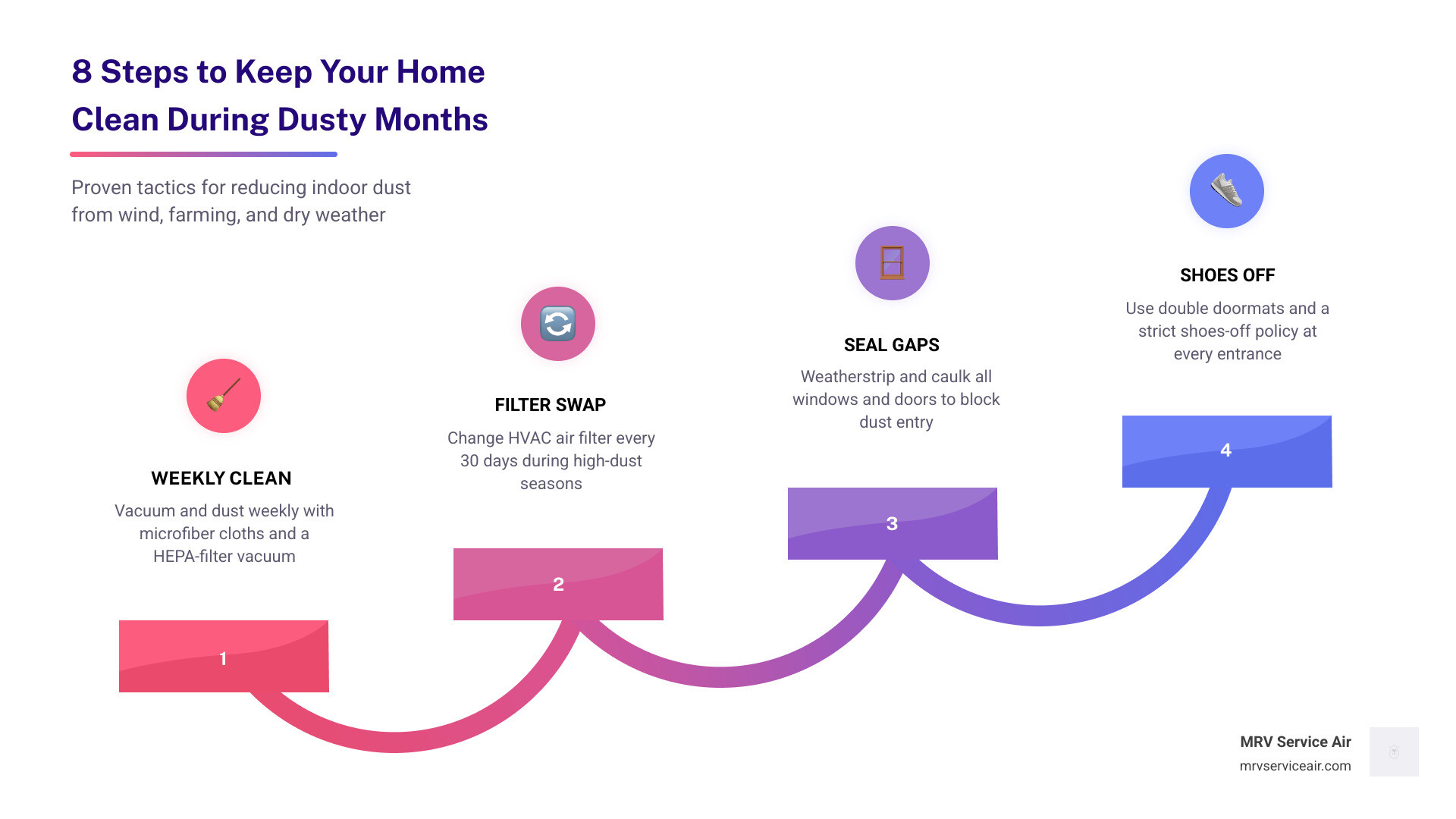
Here’s a quick overview of the most effective steps:
- Vacuum and dust weekly using microfiber cloths and a HEPA-filter vacuum
- Change your HVAC air filter every 30 days during high-dust seasons
- Seal gaps around windows and doors with weatherstripping and caulk
- Use a shoe-free policy and double doormat system at every entrance
- Run an air purifier with a HEPA filter in high-use rooms
- Keep windows closed during dust storms and switch your HVAC to recirculate mode
- Wash bedding weekly and vacuum mattresses monthly to reduce dust mites
- Groom pets outdoors and wash their bedding regularly
If you’ve ever wiped down a shelf, turned around, and found dust already settling back — you’re not imagining things. Research shows that indoor air can be two to five times more polluted than outdoor air under normal conditions. During a major dust event, that number climbs even higher. Even in a well-sealed home, up to 15–30% of outdoor particulate matter can still find its way inside.
For homeowners in rural Kern County, the problem is especially persistent. Wind-blown soil, nearby farming operations, and seasonal haboobs mean dust pressure on your home doesn’t let up for months at a time. Nearly one in three adults in the U.S. reports a seasonal allergy — and household dust is one of the biggest triggers.
The good news? A combination of smarter cleaning habits, proper HVAC maintenance, and a few targeted upgrades can make a significant difference in how clean and breathable your home feels — even during the dustiest time of year.
Why Your Home Accumulates Excess Dust During Dry Seasons
In the southern San Joaquin Valley, our geography dictates our air quality. Surrounded by mountains, communities like Delano, Wasco, Shafter, and Earlimart act as a natural basin for wind-blown dirt and dry soil. During the hot, dry months of June 2026, the outdoor environment works overtime to deposit fine silt onto every conceivable indoor surface.
Agricultural harvesting is another major player in our local climate. Large-scale farming equipment stirs up massive plumes of fine particulate matter that float across the Valley. This agricultural dust contains not just soil, but also dried organic matter, pollen, and microscopic crop residues that easily drift into residential neighborhoods. To understand how these outdoor particles interact with your home’s air, read our deep dive on The Dirty Truth About Agricultural Dust and Indoor Air.
The Impact of Drafty Windows and Doors
It doesn’t take an open window for dust to invade your living space. Microscopic gaps around window frames, sliding doors, and exterior entryways act as open invitations for outdoor dirt. High winds create a pressure difference, actively forcing dusty air through these tiny cracks.
If you suspect your home has air leaks, you can perform a simple DIY “flashlight test” at night. Have one person stand outside with a bright flashlight and shine it along the edges of your closed doors and windows while you look from the inside. If you see light bleeding through, you have found an active air leak.
To fix these drafts, apply a high-quality exterior caulk to seal stationary window frames and install fresh weatherstripping along door jambs and window tracks. Adding sturdy door sweeps to the bottom of exterior doors is another quick, cost-effective way to block dust at ground level.
How to Keep Your Home Clean During Dusty Months When High Winds Strike
When severe weather strikes the southern Central Valley, it often brings high winds or even massive, rolling walls of dust known as haboobs. These intense events push fine PM2.5 (particulate matter smaller than 2.5 microns) and PM10 particles straight toward your home.
During these high-wind events, your immediate defense should be to tighten your home’s envelope:
- Close every window and door immediately. Even a tiny crack can allow a thick layer of silt to coat your furniture.
- Switch your HVAC system to “recirculate” mode. Running your air conditioner on fresh-air intake during a dust storm pulls heavy outdoor particulates directly into your ductwork, overwhelming your filter and spreading dirt to every room. If the storm is exceptionally severe and the air is filled with thick dust, turning the HVAC system off entirely for an hour or two can prevent silt from being sucked into your system.
Essential Tools and Routines for Effective Dust Removal
Maintaining a clean home when the air outside is thick with dust requires the right tools. Standard cleaning utensils often do more harm than good by kicking settled particles back into the air where they float for hours before landing right back on your tables and shelves.
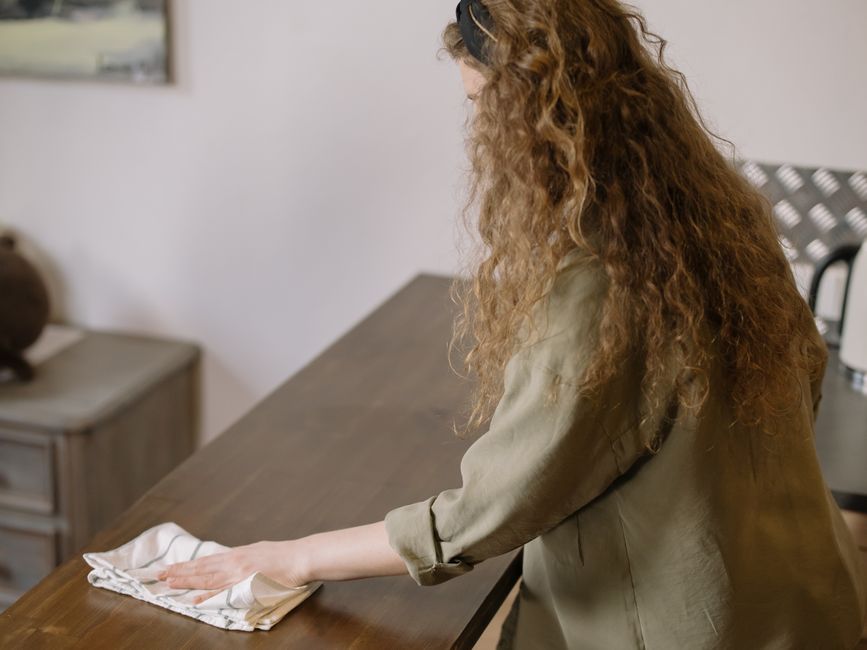
To stay ahead of the buildup, establish a tiered cleaning schedule:
- Weekly: Vacuum high-traffic carpets and damp-wipe primary hard surfaces.
- Monthly: Clean deep dust magnets like window blinds, ceiling fan blades, and light fixtures.
- Every 3 to 6 Months: Clean underneath heavy furniture, wash curtains, and vacuum baseboards.
When dusting, always use the top-to-bottom method. Start with ceiling fans and high shelves, move to countertops and tables, and finish with the floors. This ensures that any dust disturbed during the process falls to the ground to be captured by your vacuum, rather than settling on surfaces you’ve already cleaned.
Microfiber, HEPA Vacuums, and Smart Decluttering
Feather dusters and old cotton T-shirts are notorious for simply redistributing dust. Instead, use slightly dampened microfiber cloths. Microfiber features tiny, split fibers that physically grab and hold onto dust particles rather than pushing them around. For tight spaces, natural-bristle brushes or electrostatic dusters work incredibly well to lift dust before you wipe the area clean.
When it comes to flooring, a vacuum equipped with a certified, sealed HEPA filter is non-negotiable. Standard vacuums without HEPA seals often exhaust fine PM2.5 dust back into your breathing zone. Slow down your vacuuming pace—especially on thick carpets near entryways—to give the machine time to pull deeply embedded dirt out of the fibers.
Additionally, take a close look at your home’s decor. Clutter creates endless surfaces for dust to settle on and disrupts natural air circulation, making it much harder to keep rooms clean. Storing seasonal items in closed plastic bins rather than cardboard boxes (which shed fibers over time) will drastically reduce the dust load in closets and bedrooms.
Bedding, Upholstery, and Mattress Cleaning Schedules
Bedrooms are major dust hotspots because we spend roughly a third of our lives there, shedding dead skin cells that feed microscopic dust mites. To keep allergens at bay:
- Wash all bedding weekly in hot water (at least 130°F) to kill dust mites and dissolve body oils.
- Vacuum your mattress monthly using your vacuum’s upholstery tool, paying close attention to the seams and indentations.
- Encase pillows and mattresses in zippered, allergen-proof protector covers to trap existing dust mites and prevent new ones from colonizing your bed.
- Vacuum upholstered furniture weekly and wash throw blankets or curtains every few months to prevent fabric fibers from breaking down into household lint.
How to Keep Your Home Clean During Dusty Months Using Entryway and Pet Strategies
A massive portion of the dust inside your home doesn’t float in through the air—it walks right in through the front door on shoes and paws.
By stopping dirt at your entryways and keeping up with pet hygiene, you can prevent a significant amount of outdoor soil from ever reaching your living areas. If you have four-legged family members, check out our guide on Dusty Homes and Furry Friends: A Filter Change Schedule That Actually Works.
Stopping Dirt At the Door with Shoe Rules and Mats
Implementing a strict shoes-off policy is one of the easiest and most effective ways to reduce indoor dust. Shoe soles track in dry clay, agricultural chemicals, and road grit. Create a comfortable shoe-removal station at your main entrance with a bench and a dedicated storage rack.
To catch whatever dirt escapes the shoe rule, use a double doormat system:
- Outside Mat: A heavy-duty, coarse scraper mat (like coir or rubber) to brush off large dirt clumps and pebbles.
- Inside Mat: A soft, absorbent microfiber mat to catch fine dust and moisture.
Make it a habit to shake out and wash these mats weekly. Additionally, check your door sweeps and seals regularly; if you can see sunlight under your front door, dust is blowing straight into your entryway.
Managing Pet Dander and Fur
Our beloved pets are constant sources of organic dust, shedding dander (dead skin flakes) and hair daily. During dry, windy seasons, their fur also acts like a static duster, trapping outdoor dirt and pollen and carrying it inside.
- Groom your pets outdoors: Brushing your dog or cat outside prevents loose fur and dander from settling on your carpets and furniture.
- Wash pet bedding weekly: Use hot water to eliminate dander and dust mites.
- The baking soda trick: For smelly or dusty pet beds that can’t easily go in the washing machine, sprinkle baking soda generously over the fabric, let it sit for 15 to 20 minutes to absorb oils and odors, and then vacuum it thoroughly with a HEPA vacuum.
Optimizing Your HVAC System and Indoor Air Quality
Your heating and air conditioning system acts as the lungs of your home. If your ductwork is clean and your filtration is strong, your HVAC system will actively pull dust out of the air. However, if the system is neglected, it will continuously recirculate dust through your living spaces.
For a complete look at protecting your heating and cooling equipment from regional climate challenges, read Valley Dust vs Your HVAC: A Survival Guide and explore our tips on Cultivating Clean Air Solutions for Rural Homes.
Air Filter Maintenance and Vent Care
Choosing the right air filter is a balancing act between particle capture and system airflow. Air filters are rated using the MERV (Minimum Efficiency Reporting Value) scale.
| Filter Rating | Target Particle Size | Best Suited For | Dust Capture Capability |
|---|---|---|---|
| MERV 8 | 3.0 to 10.0 microns | Basic residential use | Captures large dust, lint, and pollen |
| MERV 11 | 1.0 to 3.0 microns | Allergy-conscious homes | Captures pet dander, fine dust, and mold spores |
| MERV 13 | 0.3 to 1.0 microns | High-dust or rural areas | Captures microscopic dust, smoke, and bacteria |
While MERV 13 filters provide superior filtration, they are thicker and restrict airflow more than lower-rated filters. Always ensure your HVAC system is compatible with a higher MERV rating before making the switch, as restricted airflow can strain your blower motor or cause your system’s coils to freeze.
During high-dust months, check your air filters every 30 days. If you live near active farming operations in Tulare or Porterville, agricultural dust can clog a standard filter in half its rated lifespan.
For more guidance on picking the right filter and managing its lifespan in agricultural zones, read our resources on Breathe Easy Near the Farm with These Top Air Filter Picks, The Dirty Truth About Filter Life in Farming Communities, and Don’t Let the Farm In: Top-Rated Filters for Rural Living.
Advanced IAQ Solutions and Air Purifiers
If standard HVAC filtration isn’t enough to keep your indoor air clear, consider adding dedicated air purification systems. Portable HEPA air purifiers are incredibly effective at cleaning the air in specific, high-use spaces like bedrooms or living rooms.
For a highly effective, budget-friendly alternative, you can build a DIY Corsi-Rosenthal box using a standard 20-inch box fan, four MERV 13 filters, and some duct tape. In testing, these DIY setups have been shown to reduce indoor PM2.5 levels by over 40%, occasionally outperforming commercial air purifiers.
Maintaining proper indoor humidity is another key piece of the dust puzzle. Keep your home’s humidity between 30% and 50%. If the air is too dry, static electricity will cause dust to cling to surfaces and stay suspended in the air longer. Using a humidifier can help weigh down airborne dust, causing it to settle quickly where it can be easily vacuumed up.
When to Call the Professionals for Persistent Dust Issues
If you find yourself dusting your home constantly only for a fine layer of gray or beige silt to reappear on your coffee table within hours, your home may have an issue that routine cleaning cannot solve.
Often, persistent dust is a sign of underlying HVAC or ductwork issues. When wind-blown dirt accumulates on your outdoor AC unit, it can severely impact system performance. Read about how this happens in our article Soil-ed Reputation: How Wind-Blown Dirt Damages Your Outdoor Unit.
Professional Duct Sealing and HVAC Servicing
One of the most common causes of extreme, persistent indoor dust is leaky ductwork. Many homes in the Delano and Bakersfield areas have duct systems running through hot, dusty attics. If there are tears, loose joints, or unsealed connections in your return ducts, the system will pull dusty attic air and fiberglass insulation directly into the HVAC system under negative pressure.
This attic dust bypasses your air filter entirely and is blown directly into your living spaces through your supply vents. Professional duct sealing closes these gaps, preventing attic dust from entering your breathing air and significantly lowering your monthly energy bills. Additionally, professional coil cleaning removes the sticky buildup on indoor evaporator coils that can trap and later redistribute airborne particles.
How to Keep Your Home Clean During Dusty Months with Expert Help
When DIY cleaning and filter changes aren’t enough, professional HVAC intervention is the next logical step. A comprehensive indoor air quality assessment can pinpoint the exact entry points of your household dust.
Professional duct cleaning removes decades of settled dust, pet dander, and construction debris from deep within your ventilation system. Combined with seasonal HVAC tune-ups, these professional services ensure your heating and cooling system runs efficiently while keeping your indoor air clean and healthy throughout the year.
Frequently Asked Questions about Dust Control
Why does my house feel so dusty even after I vacuum?
If your home feels dusty immediately after you clean, your vacuum cleaner may be the culprit. Standard vacuum cleaners without a certified, sealed HEPA filter often exhaust fine dust particles back into the room through the motor housing. Additionally, the physical act of vacuuming can generate static electricity on carpets, which temporarily pulls dust out of the fibers and suspends it in the air before it settles back onto your furniture.
Is it safe to run my HVAC system during an active dust storm?
During a severe dust storm or haboob, it is best to set your HVAC system to “recirculate” mode rather than pulling in outdoor air. If the storm is exceptionally intense and visibility drops significantly, turning your HVAC system off entirely for the duration of the high winds is the safest choice. This prevents the vacuum effect from pulling fine silt into your ductwork and protects your air filter from becoming instantly clogged.
How often should I change my air filters during high-dust seasons?
While standard recommendations suggest changing 1-inch air filters every 90 days, high-dust seasons in agricultural areas like Wasco, Shafter, and Delano require a 30-day check. A single wind storm or harvesting event can load an air filter with as much dust as three months of normal operation, restricting airflow and putting your heating and cooling system at risk of damage.
Conclusion
Keeping your home clean during the dustiest months of the year requires a consistent, proactive strategy. By combining top-down cleaning methods, strict entryway controls, and proper HVAC care, you can maintain a comfortable, healthy, and dust-free indoor environment for your family.
When DIY cleaning and filter changes aren’t quite enough to beat the Valley dust, our team is here to help. At MRV Service Air, we provide prompt, quality heating, cooling, and indoor air quality services at affordable prices throughout Delano, Bakersfield, Tulare, and the surrounding Kern and Tulare County communities.
If you are ready to improve your home’s air quality and put an end to persistent household dust, schedule a professional system checkup with us today. For expert support, contact us to book your HVAC Service in Delano.