







Why Knowing the Signs Your Air Filter Needs Changing Can Save You Money and Comfort
The signs your air filter needs changing are easy to miss — until your energy bill spikes, your allergies flare up, or your AC starts struggling to keep up on a hot Central Valley day.
Here are the most common signs to watch for:
- Visibly dirty or gray filter — holds up to light and blocks it completely
- Weak airflow from vents — rooms take longer to cool or heat
- Rising energy bills — system works harder to push air through a clogged filter
- Dusty or musty smell when the system runs
- More frequent allergy or respiratory symptoms indoors
- Unusual noises — rattling, hissing, or humming from the HVAC unit
- Uneven temperatures between rooms
- Short cycling — system turns on and off more frequently than normal
- Ice forming on AC lines or coils
- It has been longer than 90 days since the last replacement
For car engines, the signs are different: reduced fuel economy, rough idling, engine misfires, black exhaust smoke, or a fuel smell on startup.
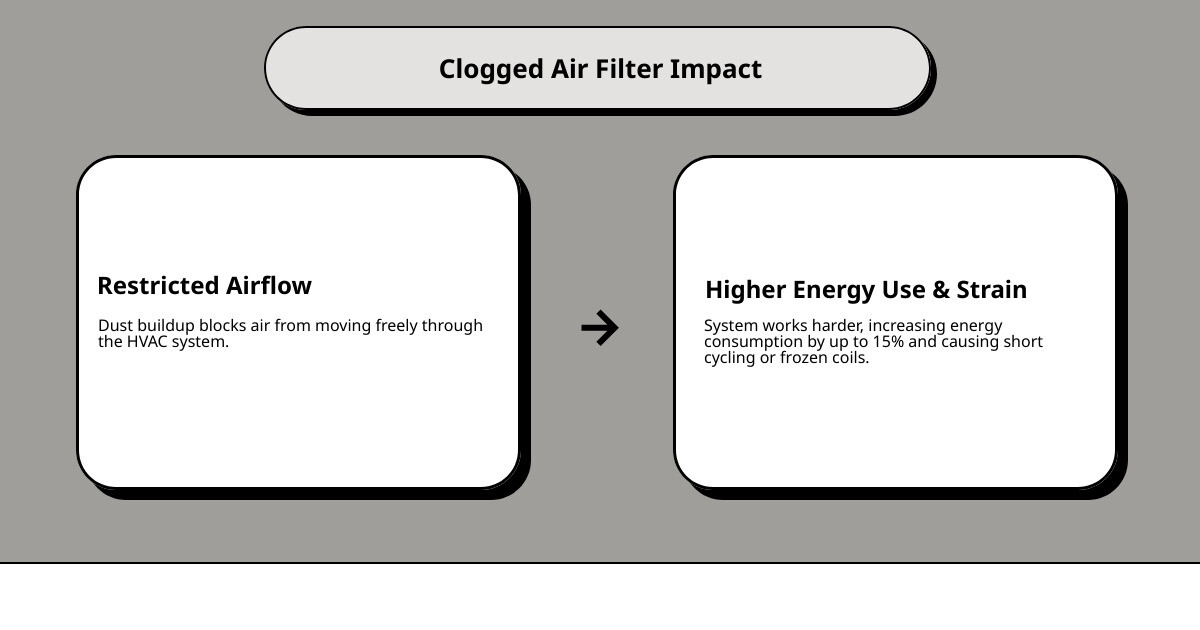
A dirty filter does not just hurt your comfort. According to the U.S. Department of Energy, a clogged filter can increase energy consumption by up to 15%. And in dusty rural areas like Kern County, filters clog faster than most replacement schedules account for.
The fix is simple and inexpensive. Catching these signs early protects your system, your air quality, and your wallet.
Signs your air filter needs changing terms made easy:
- air filter replacement frequency for dusty homes
- best air filter for agricultural area homes
Major Signs Your Air Filter Needs Changing in Your Home HVAC

When we think about home maintenance in places like Delano, Bakersfield, or Wasco, our minds usually jump to major repairs or system upgrades. However, a small component like your HVAC air filter plays a massive role in your daily comfort. If you ignore the signs your air filter needs changing, your entire heating and cooling system will eventually pay the price.
Here is a closer look at the primary warning signs that your home’s air filter is clogged and needs immediate attention:
- Weak Airflow from Vents: Have you noticed that the air coming out of your registers feels more like a gentle sigh than a cool breeze? When an air filter is caked with dust, it acts like a wall, restricting the volume of air your system can push into your rooms.
- Rapid Dust Accumulation: If you find yourself dusting your furniture every two days only to see a fresh layer of grime settle almost immediately, your air filter is likely full. Once a filter reaches its holding capacity, excess dust bypasses the filter entirely and recirculates back into your home.
- Dusty, Musty Smells: When the AC kicks on, does your living room smell like a dusty attic or a damp basement? A dirty filter traps moisture alongside organic particles, creating a breeding ground for musty odors that are distributed directly through your ductwork.
- Spikes in Allergy Symptoms: If your family is sneezing, coughing, or experiencing itchy eyes while indoors, your filter has stopped doing its job. This is especially true in the Central Valley, where agricultural dust and seasonal pollen are constant challenges.
- Short Cycling: A clogged filter restricts the airflow necessary to keep your system at a safe operating temperature. To protect itself from overheating, your HVAC system may shut down prematurely, only to turn back on a few minutes later. This rapid on-and-off cycling places immense wear and tear on your equipment.
- Frozen Evaporator Coils: This seems counterintuitive during a blazing Kern County summer, but a lack of airflow prevents warm indoor air from passing over your cold evaporator coils. Without that heat exchange, the condensation on the coils freezes solid, blocking all cooling and potentially damaging your compressor.
- Rising Energy Bills: When your system has to work twice as hard to pull air through a dirty filter, it consumes significantly more electricity. If your monthly utility bills are creeping up for no obvious reason, a neglected filter is often the culprit.
Living in our region means dealing with unique environmental factors. To understand why local conditions make filter maintenance so critical, check out our guides on Why the Valley’s Dust and Heat Are Your AC’s Worst Enemies and Valley Dust vs Your HVAC: A Survival Guide.
Physical Signs Your Air Filter Needs Changing During Inspection
You do not have to wait for your system to start malfunctioning to know if it is time for a new filter. A quick physical inspection is the most reliable way to check.
We recommend performing a “light test” once a month. Simply turn off your HVAC system, slide the air filter out of its slot, and hold it up to a bright light source or the sun. If the light cannot pass through the pleated material, your filter is clogged and needs to be replaced immediately.
During your inspection, look out for these physical red flags:
- Gray or Black Pleats: A clean filter is typically bright white. If yours has turned a dark gray or black, it is saturated with dirt, soot, and microscopic pollutants.
- Visible Dust Clumps and Hair: If you see thick layers of pet dander, hair, or visible dust bunnies clinging to the mesh, the filter has long passed its prime.
- Damaged or Warped Seals: A filter that is buckling, bowing, or showing signs of damaged cardboard framing is failing to create a tight seal. This allows unfiltered air to leak around the edges, rendering the filter useless.
In agricultural hubs like Tulare or Earlimart, the soil particles kicked up by farming operations are incredibly fine and abrasive. For a deeper look into what is actually floating in our air, read about The Dirty Truth About Agricultural Dust and Indoor Air.
Performance Signs Your Air Filter Needs Changing and Straining Your System
Beyond physical dirt, you can often hear and feel the strain a clogged filter places on your HVAC system. When airflow is choked off, the entire system must run longer and hotter to maintain your thermostat settings.
You might notice that your AC runs in incredibly long cooling cycles without ever reaching your target temperature. This constant operation can cause the outdoor compressor or indoor blower motor to become hot to the touch. You may also notice uneven room temperatures — rooms furthest from the air handler might feel warm and stuffy, while rooms closer to the unit are cold.
This sustained system strain dramatically increases your energy use and can cut your equipment’s lifespan in half. To keep your system running smoothly when temperatures soar, follow our professional advice on How to Maintain Your AC in Extreme Heat and Dust.
How Car Air Filters Differ from Home HVAC Filters
While both car air filters and home HVAC filters serve the same basic purpose — trapping airborne contaminants to protect a system and improve performance — they operate in entirely different environments and have distinct warning signs when they fail.
Your car’s engine requires an immense volume of clean air to function. In fact, a modern combustion engine needs around 10,000 liters of air to combust just one single liter of petrol (gasoline). When a car’s engine air filter becomes clogged, it directly impacts the combustion process, leading to horsepower loss (up to 11% in severe cases), decreased fuel economy, rough idling, and engine misfires.
To help you distinguish between the two, we have put together a quick comparison table:
| Feature | Home HVAC Air Filter | Car Engine Air Filter |
|---|---|---|
| Primary Purpose | Protects HVAC equipment; cleans indoor living air | Protects engine cylinders; ensures proper fuel combustion |
| Typical Lifespan | 30 to 90 days (depending on filter type and pets) | 12,000 to 15,000 miles (or once per year) |
| Material Construction | Pleated paper, synthetic fibers, or fiberglass | Pleated synthetic fibers, cotton, or foam with metal mesh |
| Key Failure Warning Signs | Weak vent airflow, rising energy bills, frozen coils, dust buildup | Engine misfires, rough idling, black exhaust smoke, smell of fuel |
| Severe Neglect Outcome | Blower motor failure, frozen system, high utility bills | Spark plug fouling, engine hesitation, reduced horsepower |
How Often to Replace Your Air Filters
How often should you replace your home air filter? While a general rule of thumb is to check it monthly and replace it at least every 90 days, the actual timeline depends heavily on your filter type, household needs, and local environment.
First, let’s look at the different types of filters and their typical lifespans:
- Fiberglass Filters (1-inch): These are the basic, transparent filters. They are designed to protect your equipment from large dust bunnies, but they do very little for indoor air quality. They must be replaced every 30 days.
- Pleated Polyester Filters (1-inch to 2-inch): These are the most common household filters. They have a larger surface area to trap smaller particles like pollen and pet dander. They typically last 60 to 90 days.
- Deep Pleated Media Filters (3-inch to 5-inch): These thick filters fit into specialized media cabinets. Because of their massive surface area, they can last anywhere from 6 to 12 months before needing a change.
- HEPA Filters: High-Efficiency Particulate Air filters provide the highest level of filtration, capturing 99.97% of airborne particles. These are usually part of dedicated air purification systems and are replaced annually.
However, standard manufacturer recommendations do not always account for life in our farming communities. If you live in Porterville, Richgrove, or Shafter, agricultural dust, seasonal harvesting, and high winds mean your filters will clog much faster than the national average.
Furthermore, lifestyle factors play a huge role. If you have multiple pets, suffer from severe allergies, or live in a highly active household, you will need to accelerate your replacement schedule.
To help you build a routine that actually matches your lifestyle, explore our helpful guides:
- Learn how rural living alters your filter’s life cycle in The Dirty Truth About Filter Life in Farming Communities.
- Get a customized routine for your furry family members with Dusty Homes and Furry Friends: A Filter Change Schedule That Actually Works.
- Find the best products to protect your home by reading Breathe Easy Near the Farm With These Top Air Filter Picks and Don’t Let the Farm In: Top Rated Filters for Rural Living.
Frequently Asked Questions About Air Filter Maintenance
Can a dirty air filter cause my AC to freeze up?
Yes, absolutely. This is one of the most common causes of frozen air conditioning systems. Your AC cools your home by blowing warm indoor air across a freezing cold evaporator coil. The coil absorbs heat from the air, cooling it down before it goes back into your rooms.
If your air filter is completely clogged, it blocks that warm airflow. Without the warm air to absorb, the temperature around the evaporator coil drops below freezing. Any moisture or humidity in the air that condenses on the coil will instantly freeze into ice. Once ice begins to form, it acts as an insulator, making the problem worse until your entire system freezes into a solid block of ice, potentially destroying your compressor.
How often should I replace my HVAC filter if I have pets?
If you have pets, you should inspect your filter every 30 days and replace it at least every 45 to 60 days.
Dogs and cats constantly shed fur and microscopic skin flakes (dander). Your HVAC system pulls this floating dander straight into the return vents, where it quickly clings to the filter fabric. If you have multiple pets, or heavy-shedding breeds like German Shepherds or Siberian Huskies, your filter can easily clog in as little as 30 days. Keeping up with regular changes is essential to maintain your indoor air quality and keep pet odors from circulating.
Can I clean and reuse a disposable air filter?
No, you should never attempt to wash or clean a disposable filter (such as standard fiberglass or cardboard-framed pleated polyester filters).
Disposable filters are engineered for single-use performance. Spraying them with water or using compressed air to blow out the dust will permanently damage the delicate synthetic fibers, creating microscopic tears. This ruins their filtration efficiency, allowing dust and debris to pass directly into your HVAC equipment. Additionally, trapping water in a disposable paper-framed filter will cause it to warp and create a breeding ground for mold and mildew. If you want a reusable option, you must purchase a filter specifically labeled by the manufacturer as washable.
Conclusion
Paying attention to the signs your air filter needs changing is one of the simplest, most effective ways to protect your home comfort and your wallet. By keeping your filters clean, you can improve your indoor air quality, lower your monthly energy consumption by 5% to 15%, and prevent costly emergency HVAC breakdowns.
At MRV Service Air, we are proud to serve our neighbors across Delano, Bakersfield, Wasco, Shafter, Porterville, and the surrounding Kern and Tulare County communities. We specialize in providing prompt, quality heating and cooling services at affordable prices to keep your home running efficiently all year long.
To stay ahead of the seasons and ensure your system is fully prepared for the Central Valley’s intense heat and dust, read our guide on How Often to Schedule Tune-Ups When the Dust Starts Flying and discover tailored solutions in Cultivating Clean Air Solutions for Rural Homes.
If your system is struggling, making strange noises, or if you need professional assistance choosing the perfect filter setup for your home, we are here to help. Schedule professional air filter replacement in Delano today and let us handle the dirty work!