







Why Hot Climates Turn Small HVAC Mistakes Into Big Problems
The hvac maintenance mistakes homeowners make in hot climates are surprisingly common — and surprisingly costly. In places like Delano, Bakersfield, and the broader Central Valley, summer temperatures regularly push past 100°F, and your air conditioner isn’t just a comfort appliance — it’s a necessity. When small maintenance slip-ups stack up, the consequences hit harder and faster than they would in a milder region.
Here’s a quick look at the most common mistakes to avoid:
- Skipping annual professional tune-ups — leads to early system failure and voided warranties
- Not changing air filters often enough — can raise energy bills by up to 15%
- Blocking or closing vents — creates pressure imbalances that damage ductwork
- Ignoring condensate drain cleaning — causes water damage and mold growth
- Obstructing the outdoor unit — can increase energy use by up to 20%
- Attempting DIY repairs — risks safety issues and costly secondary damage
- Ignoring warning signs — strange noises, musty smells, or rising bills signal real problems
In moderate climates, some of these habits might go unnoticed for a season or two. But in the extreme heat of California’s Central Valley, a neglected AC system can fail years ahead of schedule. A well-maintained unit typically lasts 12–15 years. Skip the basics, and that number can drop to 8–10 years — or less.
The good news is that most of these mistakes are completely preventable with a little awareness and a consistent maintenance routine.
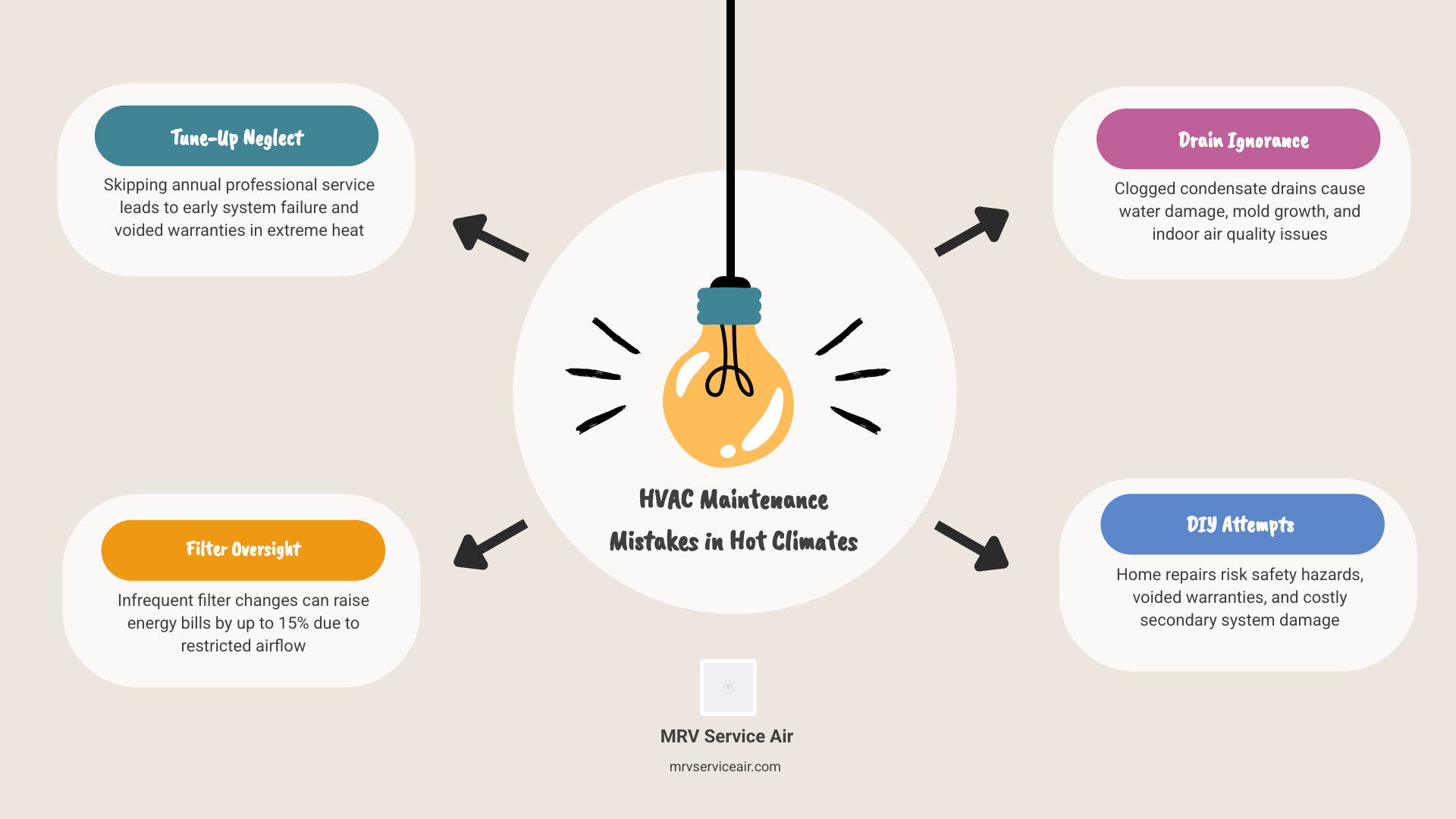
Hvac maintenance mistakes homeowners make in hot climates terms to remember:
- seasonal maintenance plans
- hvac maintenance checklist for hot agricultural climates
- hvac maintenance tips for central valley homeowners
Why Extreme Heat Demands Proactive HVAC Care

Living in the Central Valley means our cooling systems operate under some of the most demanding conditions in the country. From Delano to Bakersfield, our summer weather isn’t just warm; it is relentlessly hot. Because of this extreme environment, treating your air conditioner with a “set it and forget it” attitude is a recipe for an early system replacement.
Unlike milder regions where an air conditioner might only run for a few hundred hours a year, systems in our hot, agricultural climate work overtime. Understanding how this environment impacts your system is the first step toward avoiding major breakdowns. To keep your home cool when the valley heat is at its worst, it helps to understand Why Extreme Weather Demands a Proactive Maintenance Plan.
The Toll of Triple-Digit Temperatures on System Lifespan
During a typical Central Valley summer, an air conditioner can easily log over 2,500 cooling hours. This constant operation subjects the electrical and mechanical parts of your system to extreme wear and tear. One of the most significant physical stressors is thermal cycling.
Thermal cycling occurs as your system starts up, runs at maximum capacity in triple-digit heat, and then shuts down, causing the metal components to rapidly expand and contract. Over time, this constant expansion and contraction causes metal fatigue, loosens electrical connections, and degrades critical components like capacitors and fan motors.
When you neglect routine care under these conditions, you risk a 30% reduction in your system’s overall lifespan. Instead of enjoying a reliable system for 12 to 15 years, you could find yourself shopping for a costly replacement in year 8 or 9. For practical advice on keeping your unit running efficiently for as long as possible, check out these Pro Tips for a Long-Lasting Central Valley Air Conditioner.
How Humidity and Salt Air Accelerate Wear and Tear
While the Central Valley is primarily known for dry, dusty heat, we also experience localized humidity spikes. Agricultural irrigation, canal networks, and seasonal summer weather can introduce significant moisture into the air.
High humidity forces your air conditioner to work twice as hard. Before the system can lower the indoor temperature, it must perform “latent cooling,” which is the process of removing moisture from the air. This moisture condenses on your indoor evaporator coils.
When high humidity is combined with the heavy agricultural dust common in areas like Porterville, Wasco, and Shafter, it creates a sticky mud-like grime on the coils. This buildup restricts heat transfer, forces the system to run longer cycles, and provides a breeding ground for mold and bacteria. This degrades your indoor air quality and triggers musty odors throughout your home.
HVAC Maintenance Mistakes Homeowners Make in Hot Climates
When the summer heat peaks, we see a massive surge in emergency service calls. Interestingly, the vast majority of these mid-summer emergencies are completely preventable. They are almost always the result of minor, overlooked maintenance habits that snowball into major mechanical failures.
Understanding the most common hvac maintenance mistakes homeowners make in hot climates can save you from a hot, uncomfortable house and high repair bills. To see just how quickly minor neglect can turn into a major headache, read about Why Skipping Your AC Tune-Up is a Hot Mess.
How Skipping Annual Tune-Ups Leads to Costly Breakdowns
One of the most common mistakes is assuming that because an air conditioner turned on yesterday, it doesn’t need professional attention today. Skipping your annual professional tune-up is a major gamble in a hot climate.
During a professional maintenance visit, technicians do much more than clean the unit. They inspect electrical connections, measure amperage draw, test the capacitors, and verify that refrigerant levels are exact.
A system that is even 10% low on refrigerant can lose up to 20% of its cooling capacity, forcing it to run longer and consume more power. Furthermore, skipping these seasonal visits can void your manufacturer warranty. Most major brands require documented annual professional maintenance to honor parts warranties. If you want to know exactly what goes into keeping your system safe, you can read about Everything You Get in a Typical HVAC Maintenance Plan.
Why DIY Repairs Are Highly Risky
With the rise of online video tutorials, many homeowners attempt to diagnose and repair complex HVAC issues themselves. While clearing weeds away from your outdoor unit is an excellent DIY task, attempting to handle electrical components or refrigerant is highly risky.
Modern air conditioning systems run on high-voltage electricity and use highly pressurized chemical refrigerants. Handling these components without specialized training and licensing can lead to severe personal injury, property damage, and system failure.
Additionally, ignoring early warning signs—such as strange grinding noises, squealing sounds, or unusual musty smells—often turns a simple fix into a catastrophic failure. A grinding noise, for example, usually points to a failing motor bearing. If addressed early, a technician can often replace the bearing or motor quickly. If ignored, the motor can seize entirely, causing the system to overheat and destroy the compressor.
Airflow and Drainage Blunders That Spike Energy Bills
Your air conditioner relies on steady, unrestricted airflow to transfer heat out of your home. When airflow is blocked or restricted, the system must work much harder to achieve the temperature set on your thermostat. This extra strain directly translates to higher utility bills and premature component wear. To ensure your system is getting the airflow it needs, review this guide on How to Maintain Your AC in Extreme Heat and Dust.
Neglecting Air Filters and Blocking Vents
The simple act of forgetting to change your air filter is one of the most expensive mistakes you can make. In dusty agricultural areas like Kern, Tulare, and Earlimart, air filters clog much faster than they would in coastal or urban environments.
A dirty, dust-clogged filter restricts airflow, which can increase your system’s energy consumption by 5% to 15%. Over time, this restricted airflow can cause the indoor evaporator coil to freeze over, completely blocking cool air from entering your home.
When choosing a filter, pay attention to MERV (Minimum Efficiency Reporting Value) ratings. While high-MERV filters capture smaller particles, they can also restrict airflow if your system’s blower motor isn’t designed to handle them. For standard residential systems, a MERV rating between 8 and 11 is usually the sweet spot.
Another common mistake is closing supply vents in unused rooms to “save energy.” Modern HVAC systems are engineered to distribute air evenly throughout a specific volume of space. Closing vents disrupts this balance, building up static pressure in your ductwork. This high pressure can cause duct leaks, strain the blower motor, and cause the system to short-cycle. To keep your system happy, learn How Often to Schedule Tune-Ups When the Dust Starts Flying.
Ignoring Condensate Drains and Outdoor Unit Clearance
Your air conditioner doesn’t just cool the air; it also dehumidifies it. As moisture is pulled from the indoor air, it drips into a condensate pan and flows out of your home through a drain line.
In hot, humid conditions, the warm water flowing through this dark drain line is a perfect breeding ground for algae, mold, and silt. If you do not flush this line regularly, a clog will form. When the line backs up, water can overflow the drain pan, causing extensive damage to your ceilings, walls, and flooring.
Similarly, your outdoor condenser unit needs room to breathe. The outdoor unit’s job is to release the heat collected from inside your home. If the unit is blocked by overgrown shrubs, weeds, storage boxes, or decorative fencing, that heat gets trapped. This lack of airflow can increase your energy consumption by up to 20% and put your compressor at risk of overheating. Always maintain at least two feet of clear space around the entire outdoor unit.
Frequently Asked Questions About Hot Climate AC Care
How often should I change my air filter in a hot, dusty climate?
In the Central Valley, especially during the peak summer months, we recommend checking your air filter every 30 days. If you live near active agricultural fields, have pets, or suffer from allergies, your filter may need to be replaced monthly. During the milder spring and fall seasons, you can typically stretch this to every 60 to 90 days.
What are the signs that my AC condensate drain is clogged?
The most common signs of a clogged drain line include:
- Water pooling around the indoor furnace or air handler unit.
- A musty, damp odor coming from your vents when the system runs.
- The system turning off abruptly and refusing to turn back on (often caused by a safety float switch triggering to prevent water damage).
Can skipping professional maintenance void my manufacturer warranty?
Yes. Almost all major HVAC manufacturers require proof of annual professional maintenance to honor warranty claims on major components like the compressor or coils. Keep a record of your professional service invoices to ensure your investment remains protected.
Conclusion
Avoiding the most common hvac maintenance mistakes homeowners make in hot climates is the easiest way to protect your home’s comfort, lower your monthly energy bills, and maximize the lifespan of your cooling system. In places like Delano, Bakersfield, and across the Central Valley, proactive maintenance isn’t just a recommendation—it is a necessity for keeping the summer heat at bay.
At MRV Service Air, we are dedicated to providing prompt, quality service at affordable prices. Whether you need a seasonal tune-up to prepare for the summer heatwaves or a quick response to an unexpected cooling issue, our experienced team is here to help.
Don’t wait for the next triple-digit day to find out if your system is up to the task. Contact us today to Schedule AC Service in Delano and Bakersfield and keep your home cool and comfortable all year long.